
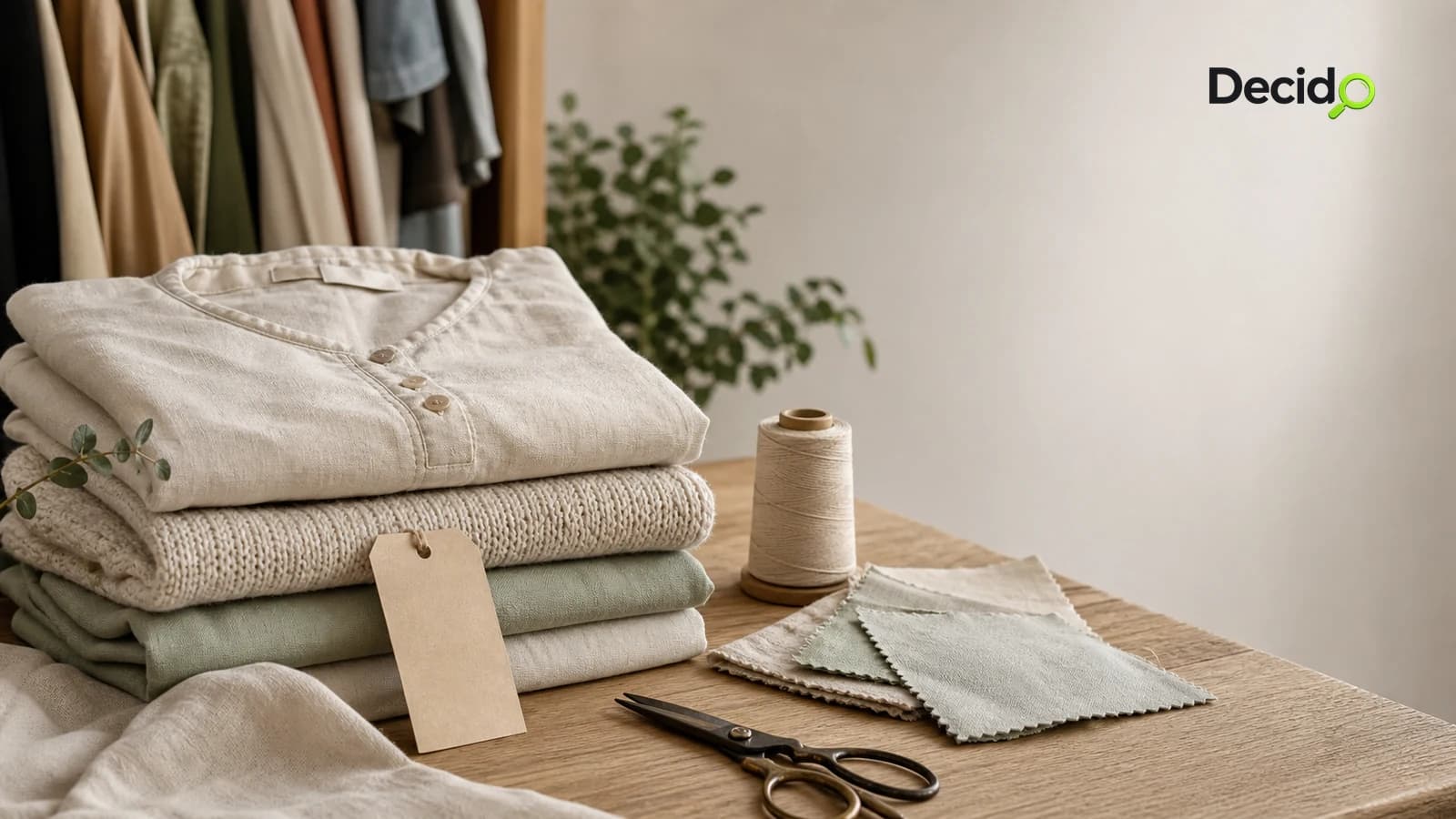
“Recycled” can be useful information, but it does not describe the whole garment. You still need to know which fibre is recycled, in what percentage, with what verification, how long the garment will last and what can happen at end of life.
The shortcut can go in two directions: dismiss every claim as greenwashing, or treat it as automatic proof of sustainability. Both miss important details.
Recycled from what?
Recycled polyester may come from bottles or textile waste. Recycled cotton may be pre-consumer or post-consumer. The difference affects traceability and whether the textile cycle is really being closed.
The EU textile strategy stresses durability, repairability and recyclability. Recycled content is only one part of that picture.
Percentage and scope
A hang tag may highlight recycled material even when it applies only to one component. The composition label matters: main fabric, lining, padding, elastane, trims and percentages.
If the claim does not explain quantity and product part, it remains incomplete.
Durability and care
A recycled garment that wears out quickly may not be a better choice than a less promoted but longer-lasting one. Washing, construction, seams and intended use shape real durability.
For synthetics, microfibre release during use and washing remains relevant. Recycled content does not automatically remove that question.
Quick checklist
- Read which fibre is recycled and the percentage.
- Check whether the claim applies to the whole garment or one part.
- Look for verifiable certification or details, not only generic words.
- Assess construction, seams and washing instructions.
- Consider repair, long use and realistic recyclability.
Conclusion
The word “recycled” should not be ignored or isolated. It becomes useful when it is specific, verifiable and read together with composition, durability, care and end of life.
Sources