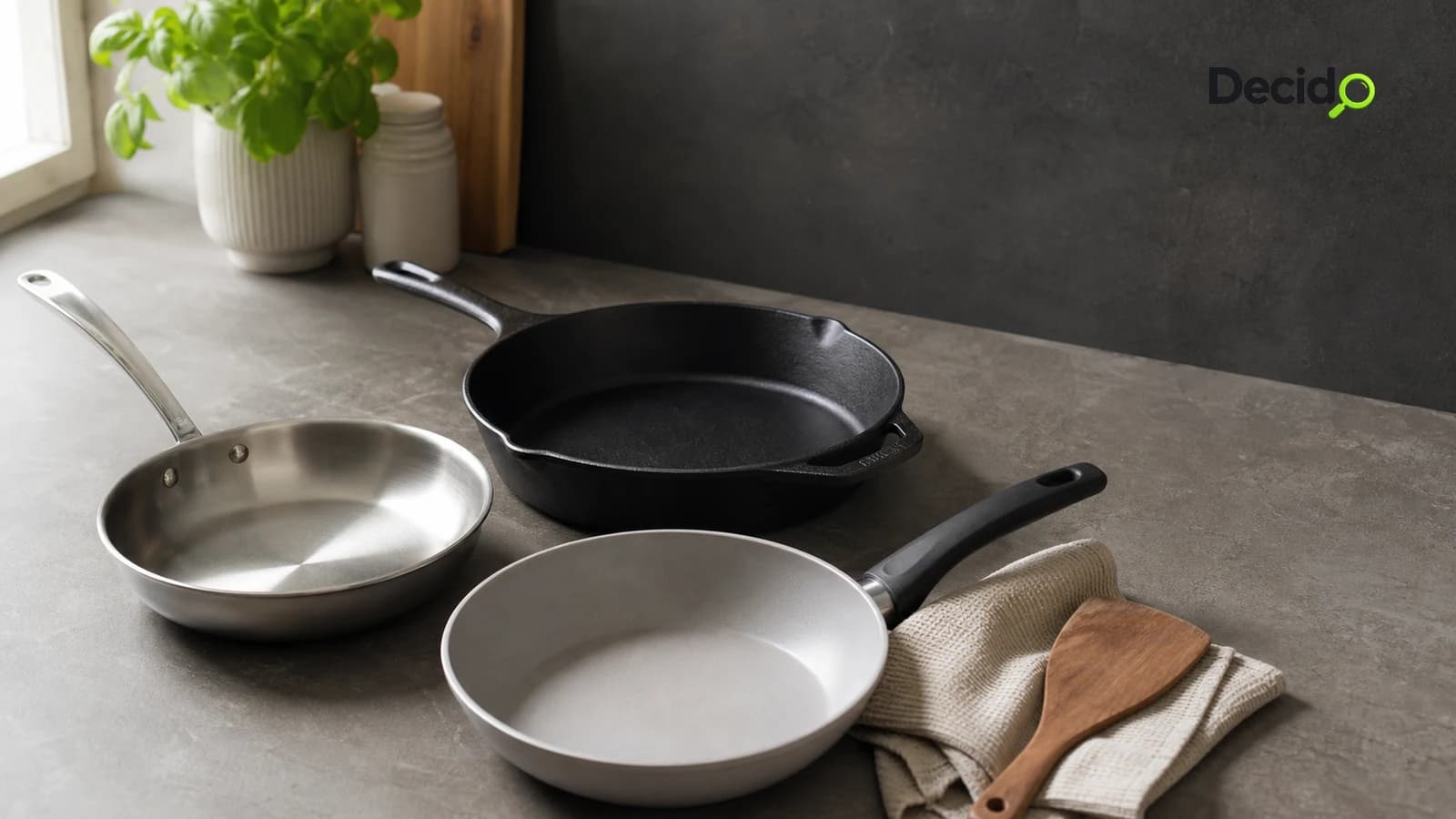
A pan is not defined only by the material printed on its packaging. The useful choice depends on what you cook, the heat you use, how much maintenance you accept and when you are willing to replace it. Stainless steel, cast iron and non-stick pans serve different routines.
The practical question is not which one is “best” in absolute terms. It is how each material behaves under real use: browning, heat tolerance, cleaning, wear and durability.
Stainless steel: durable, but less forgiving
Stainless steel is robust and useful for browning, deglazing and medium-high heat. It works best when you manage preheating, fat and timing. Those details make the difference between food sticking and food releasing.
It is not always the easiest option for eggs, delicate fish or very low-fat cooking. Its strength is that there is no non-stick coating to wear away; lifetime depends mainly on construction and care.
Cast iron: heat retention and care
Cast iron stores heat and releases it slowly. That helps with searing and crust formation, but the weight and maintenance are real factors. Traditional cast iron needs drying and protection from rust.
Enameled cast iron can simplify some routines, but it remains heavy and the enamel can chip if abused. It is a tool for people who value heat performance enough to accept the care.
Non-stick: convenient, not permanent
Non-stick pans are useful for delicate foods and cooking with less fat. Their limit is the coating. Scratches, overheating and aggressive utensils shorten useful life. A damaged non-stick pan is not the same tool as a new one.
The question is therefore practical: do you use moderate heat, avoid metal utensils and replace the pan when the surface is visibly worn?
Quick checklist
- For searing and deglazing, consider stainless steel or cast iron.
- For eggs, crepes or delicate fish, non-stick can be more practical.
- If you dislike maintenance, avoid materials that need constant care.
- Do not treat a damaged non-stick coating as if it were intact.
- Consider weight, washing, storage and actual frequency of use.
Conclusion
Stainless steel, cast iron and non-stick are different tools, not moral categories. The best choice is the one that fits the food, the heat and the maintenance you will realistically provide.
Sources