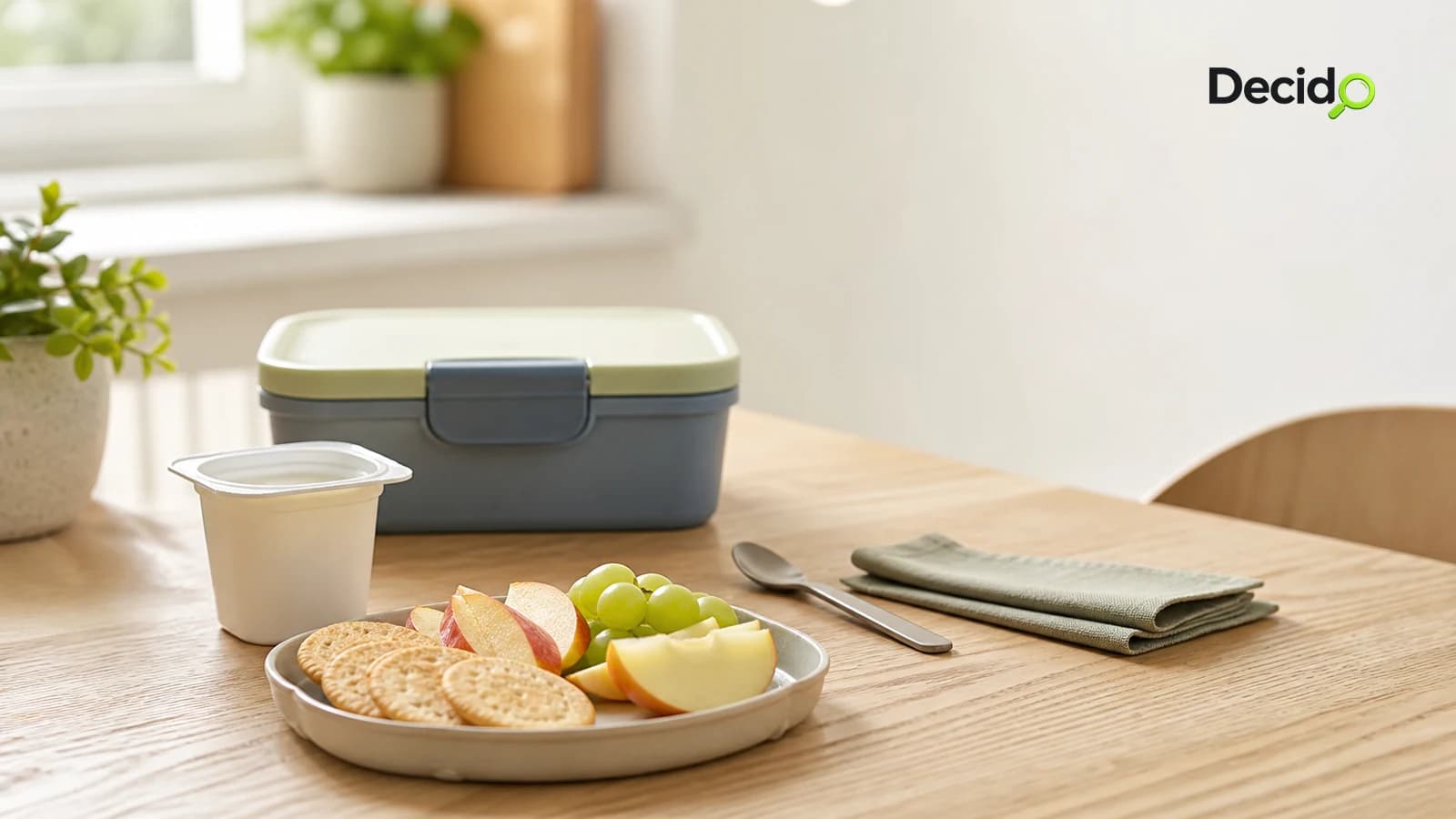
A children's snack can have bright packaging, reassuring claims and very small serving sizes. None of these elements is enough on its own. A useful reading starts with ingredients, nutrition table and how often the snack appears in the routine.
The goal is not to create a list of forbidden foods. It is to distinguish an occasional snack from a repeated daily choice.
Sugars and portion size
The “of which sugars” line per 100 g or 100 ml helps compare similar products. The manufacturer's portion may be smaller than what is actually eaten, so the 100 g figure is the starting point.
The WHO guideline on free sugars recommends reducing intake across the day. In practice, a snack should be read together with breakfast, drinks, desserts and other sweet foods.
Salt, fats and repeated ingredients
Sweet snacks are not only about sugar, and salty snacks are not only about salt. Saturated fat, salt, refined flours, syrups, concentrated juices and palatability ingredients all matter.
A short ingredient list does not automatically make a product better, but it usually makes it easier to understand.
Additives and colours
Authorised additives are regulated and have different functions: colour, preservation, texture or acidity. For children's products, the practical question is how often they appear and whether similar alternatives are simpler.
The tone should remain sober: an additive is not immediate danger, but it is information worth reading in context.
Quick checklist
- Compare sugars, salt and saturated fat per 100 g.
- Check whether the serving size is realistic.
- Read the first ingredients: they matter most by weight.
- Treat claims such as “with cereals” or “with fruit” as things to verify.
- Consider weekly frequency, not only the single snack.
Conclusion
Reading children's snacks without alarmism means avoiding both panic and automatic trust in packaging. The sounder choice comes from numbers, ingredients, portion size and real habit.
Sources