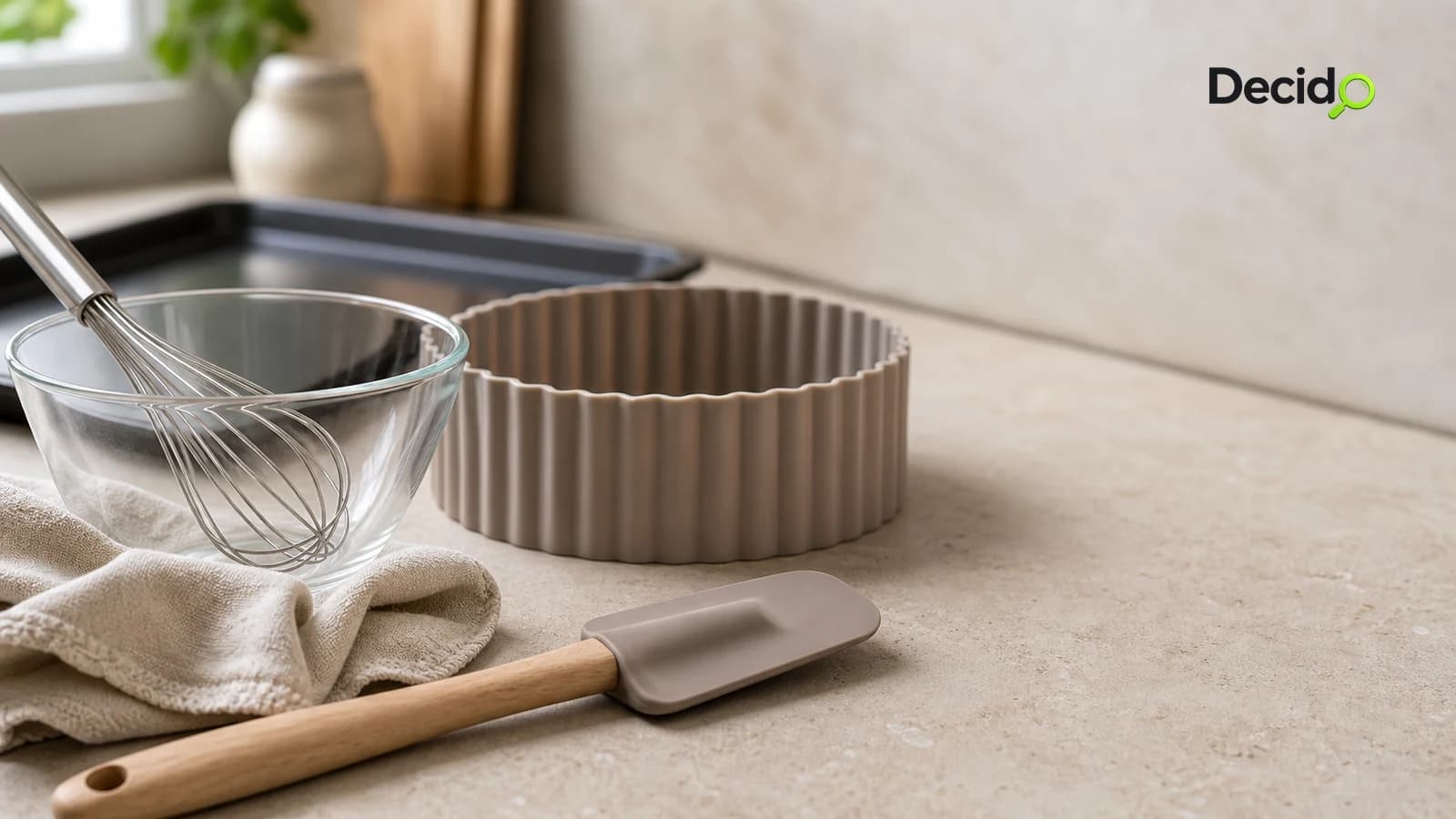
Silicone is common in kitchens because it is flexible, light and easy to store. Moulds, spatulas, lids and mats may look similar, but material quality and real use can vary widely.
“Silicone” is not a generic guarantee. As with other food contact materials, compliance, temperature, contact time, fats, wear and manufacturer instructions matter.
Food contact material
In Europe, materials intended for food contact must meet general requirements: they should not transfer constituents to food in quantities that could endanger health, unacceptably change composition or worsen sensory properties.
This principle does not mean every object is the same. A cheap mould, a technical tool and a daily spatula can differ in quality and performance.
Heat, odours and first uses
Silicone is often used with heat. That makes maximum temperature, oven type, contact with heating elements and washing instructions important. Persistent odours, deformation or sticky surfaces should not be ignored.
Technical recommendations, including those from Germany's BfR, consider volatile components and proper curing of silicone materials.
When it is practical
Silicone is useful for soft spatulas, flexible moulds and reusable lids. It may be less suitable where rigidity, cutting, abrasion or prolonged contact with fatty foods at high temperature are involved.
Quick checklist
- Check food contact indications and maximum temperature.
- Avoid direct contact with flames or heating elements unless intended.
- Do not use deformed, cut, sticky or persistently smelly items.
- Prefer clear instructions and an identifiable producer.
- Ask whether glass, steel or ceramic would fit that use better.
Conclusion
Silicone can be very practical, but it is not neutral in every situation. The decision depends on quality, heat, wear and intended use, not on the word “silicone” alone.
Sources