Regulation (EU) No 1007/2011 requires textile fibre composition to be labelled with recognised fibre names and percentages. For elastane, that matters because even 2-5% can change fit and recovery.
Elastane is not good or bad by itself. It is an elastomeric fibre used to add stretch and return. The useful questions are where it is used, how much is present, how the garment will be washed and how long it needs to last.
Small percentages can change a garment
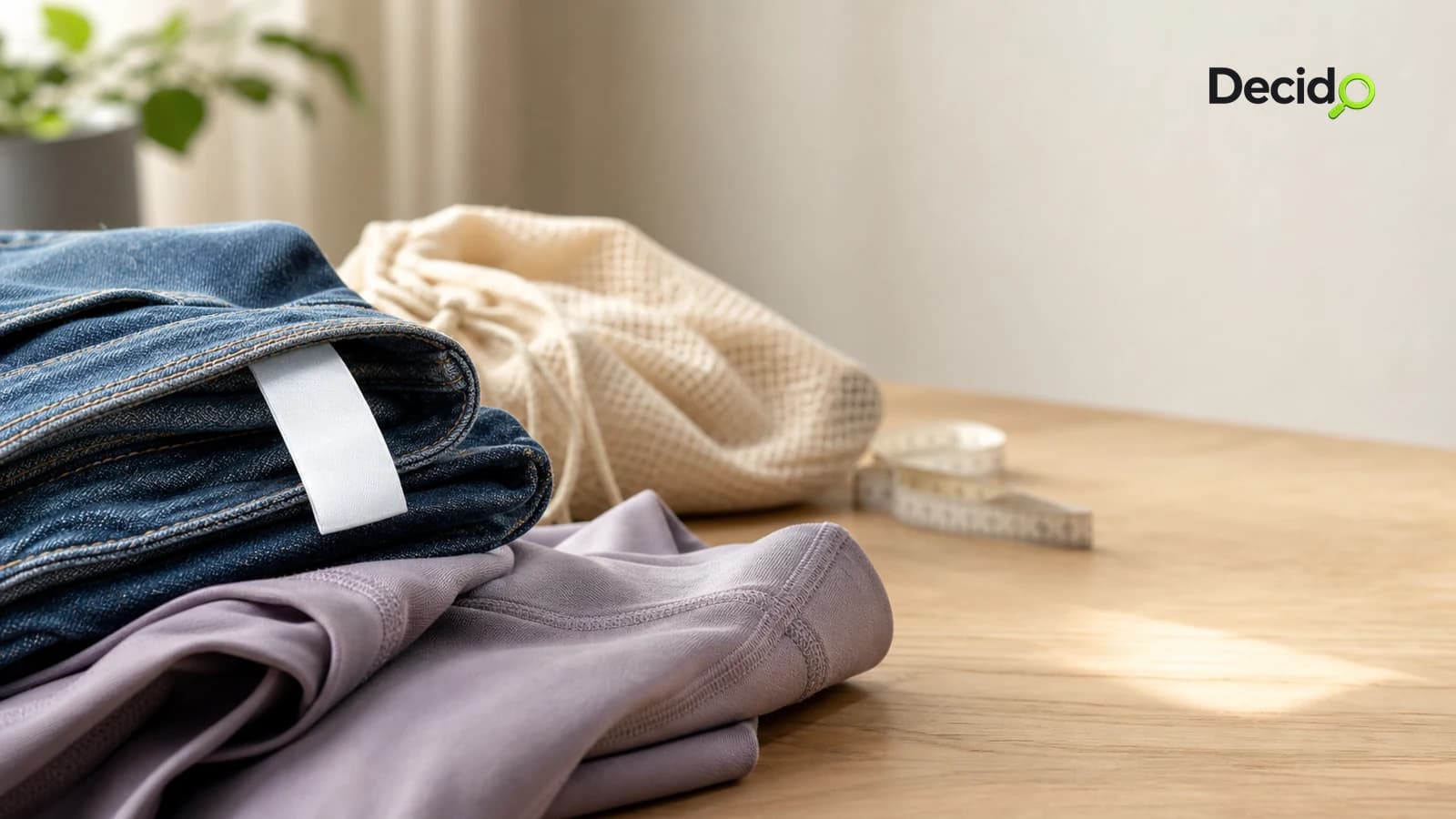
In T-shirts, jeans and sportswear, a small amount of elastane can improve movement, close fit and shape recovery. That is why it appears in stretch denim, underwear, swimwear, leggings and socks.
The percentage is not the whole story. The main fibre, fabric construction, thickness, yarn and sewing quality all matter. Jeans with 2% elastane and leggings with 20% elastane are different products.
Durability and care
Elastane can suffer from heat, bleaching, aggressive drying and frequent high-temperature washing. When recovery weakens, garments can sag at knees, waist, elbows or other tension points. The care label is therefore part of the decision.
Recycling and fibre blends
The European Environment Agency notes that synthetic textiles are part of the plastic textile economy and can contribute to microplastic release during production, use and washing. Elastane in blends adds complexity because mixed fibres are harder to separate than a single material.
- Read the main fibre first: cotton, polyester, polyamide, viscose or wool change behaviour.
- Check the elastane percentage: 2-5% often means comfort stretch; higher shares change structure.
- Read washing instructions, especially temperature, tumble drying and bleaching.
- Look at tension zones: waist, knees, elbows, shoulders and seams.
- Treat stretch claims as functional information, not proof of quality or durability.
Conclusion
Elastane is a technical choice. It can improve fit and recovery, but it raises questions about washing, heat, durability and recycling. The label helps when read together with the real garment and its use.
Fonti citate
- Regolamento (UE) n. 1007/2011 su denominazioni delle fibre tessili ed etichettatura.
- European Environment Agency, Plastic in textiles, 2021.
- European Environment Agency, Microplastics from textiles, 2022.
- Commissione europea, EU Strategy for Sustainable and Circular Textiles, 2022.